
Food is an important part of our daily lives, but it is also a beautiful form of art. For a long time, cooking was mainly about survival and filling our stomachs. People used simple ingredients from their local areas and followed traditional recipes. The main goal was to make food taste good and give people the energy to work.
However, the culinary arts have changed a lot over the years. Today, many chefs see themselves as artists, and the pure white plate is their blank canvas. When we go to a nice restaurant today, we expect a feast for all our senses. Chefs care not only about how the food tastes but also about how it looks. "Plating" is now a key part of the dining experience. Chefs use bright colors, different shapes, and special tools to make the food look like a beautiful painting.
Another big change is the mixing of different cultures. Because travel and communication are easier now, chefs can easily learn about ingredients and cooking styles from all over the world. This has led to "fusion cuisine," which combines elements from different traditions. For example, you might find a dish that mixes Japanese sushi with Mexican flavors. This exciting evolution shows that culinary art has no borders.
Furthermore, science has entered the kitchen. Some modern chefs use science to change the shape and texture of food. They might turn fruit juice into little bubbles or make ice cream with liquid nitrogen. This surprises people and makes eating a fun adventure.
In conclusion, the evolution of culinary arts expression shows human creativity. A great dish does more than stop our hunger; it tells a story, shares a culture, and brings joy to our eyes and mouths.
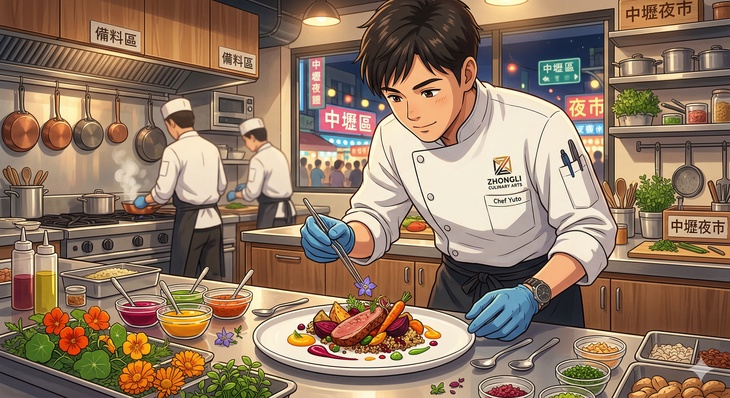
The Evolution of Culinary Arts Expression
中文翻譯
食物是我們日常生活中重要的一部分,但它也是一種美麗的藝術形式。長久以來,烹飪主要只是為了生存和填飽肚子。人們使用當地的簡單食材並遵循傳統食譜。主要目標是讓食物變好吃並提供人們工作的能量。然而,烹飪藝術多年來發生了許多變化。如今,許多廚師將自己視為藝術家,而純白的盤子就是他們的空白畫布。當我們今天去一家好餐廳時,我們期待的是一場感官的饗宴。廚師們不僅關心食物的味道,也關心它的外觀。「擺盤」現在是用餐體驗中關鍵的一部分。廚師使用鮮豔的顏色、不同的形狀和特殊的工具,讓食物看起來像一幅美麗的畫作。
另一個巨大的改變是不同文化的融合。因為現在旅行和通訊變得更容易,廚師可以輕鬆了解來自世界各地的食材和烹飪風格。這導致了「無國界料理(融合菜)」的出現,它結合了不同傳統的元素。例如,你可能會發現一道混合了日本壽司和墨西哥風味的菜餚。這個令人興奮的演變表明烹飪藝術是沒有國界的。
此外,科學也進入了廚房。一些現代廚師利用科學來改變食物的形狀和質地。他們可能會把果汁變成小泡泡,或者用液態氮製作冰淇淋。這讓人們感到驚喜,並使吃東西成為一場有趣的冒險。
總結來說,烹飪藝術表現的演變展現了人類的創造力。一道佳餚不僅能止餓;它還講述了一個故事,分享了一種文化,並為我們的眼睛和嘴巴帶來了歡樂。
🔑 重點單字 (Vocabulary)
- survival n.. 生存
- ingredient n.. 食材;成分
- traditional adj.. 傳統的
- canvas n.. 畫布
- presentation n.. 呈現;外觀(擺盤)
- communication n.. 通訊;交流
- combine v.. 結合
- element n.. 元素
- texture n.. 質地;口感
- creativity n.. 創造力
掌握一種語言等於擁有一個新世界
 語言健身房 https://www.langym.com 提供
語言健身房 https://www.langym.com 提供
