
In contemporary society, the advent of digital media has fundamentally reshaped the landscape of community building. Historically, communities were predominantly defined by geographical proximity. People forged bonds through face-to-face interactions in local neighborhoods, schools, or community centers. Today, however, the proliferation of social networking platforms has transcended physical borders, enabling individuals to cultivate meaningful relationships based on shared interests, cultural identities, and ideological values, regardless of their geographical locations.
One of the most profound impacts of digital media is its ability to democratize cultural expression. Before the internet era, mainstream media outlets acted as gatekeepers, largely determining which cultural narratives reached the public. Now, digital platforms empower marginalized groups and niche subcultures to amplify their voices. Artists, writers, and activists can showcase their creations directly to a global audience, fostering virtual communities that provide mutual support and solidarity. This digital democratization not only enriches the global cultural tapestry but also instills a sense of belonging among individuals who might feel isolated in their physical surroundings.
Furthermore, digital media facilitates rapid mobilization for community initiatives. Through crowdfunding campaigns and online petitions, communities can quickly gather resources to support local artists, preserve historical landmarks, or organize cultural festivals. The immediacy of digital communication allows for real-time collaboration, transforming passive observers into active participants in the community-building process.
Nevertheless, this digital paradigm is not without its challenges. The illusion of connectivity can sometimes mask superficial relationships, leading to a phenomenon known as "digital isolation." While people may boast hundreds of online connections, they might still lack the profound emotional support derived from physical, face-to-face interactions. Moreover, the algorithms driving many platforms tend to create "echo chambers," where individuals are only exposed to information that reinforces their preexisting beliefs, thereby hindering genuine cultural exchange and understanding.
In conclusion, digital media is a double-edged sword in the realm of community building. While it offers unprecedented opportunities for cultural expression and global connection, it also requires users to navigate its pitfalls consciously. To build truly resilient communities, we must find a harmonious balance, leveraging digital tools to enhance, rather than replace, authentic human connections.
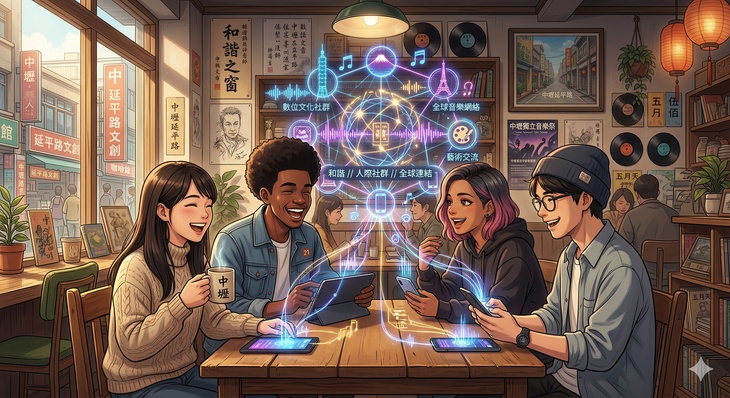
The Influence of Digital Media on Community Building
中文翻譯
在當代社會,數位媒體的出現從根本上重塑了社區營造的面貌。從歷史上看,社區主要由地理上的鄰近性來定義。人們透過在當地社區、學校或社區中心的「面對面」互動來建立聯繫。然而,今天,社群網路平台的激增已經超越了實體邊界,使個人能夠基於共同的興趣、文化認同和意識形態價值觀來培養有意義的關係,無論他們身在何處。數位媒體最深遠的影響之一,是其使文化表現民主化的能力。在網際網路時代之前,主流媒體機構扮演著守門人的角色,很大程度上決定了哪些文化敘事能傳達給大眾。現在,數位平台賦予邊緣化群體和小眾次文化放大自己聲音的權力。藝術家、作家和倡議者可以直接向全球觀眾展示他們的作品,從而培育出提供相互支持與團結的虛擬社群。這種數位民主化不僅豐富了全球文化的多樣性,也讓在實體環境中可能感到孤立的個人產生了歸屬感。
此外,數位媒體促進了社區倡議的快速動員。透過群眾募資活動和線上請願,社區可以迅速收集資源來支持當地藝術家、保護歷史地標或組織文化節慶。數位通訊的即時性允許實時的協作,將被動的觀察者轉變為社區營造過程中的積極參與者。
儘管如此,這種數位典範並非沒有挑戰。連結的錯覺有時會掩蓋表面上的關係,導致一種被稱為「數位孤立」的現象。雖然人們可能吹噓擁有數百個線上連結,但他們可能仍然缺乏從實體、面對面互動中獲得的深刻情感支持。此外,驅動許多平台的演算法往往會創造出「同溫層(回音室)」,在這些空間裡,個人只會接觸到強化他們既有信念的資訊,從而阻礙了真正的文化交流與理解。
總結來說,在社區營造領域中,數位媒體是一把雙面刃。雖然它為文化表現和全球連結提供了史無前例的機會,但它也需要使用者有意識地避開其陷阱。為了建立真正具有韌性的社區,我們必須找到一個和諧的平衡,利用數位工具來增強(而非取代)真實的人際連結。
🔑 重點單字 (Vocabulary)
- contemporary adj.. 當代的;現代的
- predominantly adv.. 主要地;占絕大多數地
- proximity n.. 鄰近;接近
- proliferation n.. 激增;擴散
- marginalized adj.. 邊緣化的
- solidarity n.. 團結;一致
- initiative n.. 倡議;新措施
- superficial adj.. 表面的;膚淺的
- phenomenon n.. 現象
- unprecedented adj.. 史無前例的
掌握一種語言等於擁有一個新世界
 語言健身房 https://www.langym.com 提供
語言健身房 https://www.langym.com 提供
