
The relentless progression of genetic engineering, particularly the advent of CRISPR-Cas9 technology, has ushered humanity into an era of unprecedented possibilities. While much of the discourse surrounding this revolutionary tool focuses on eradicating hereditary diseases and enhancing agricultural yields, its potential implications for the future of education systems are both profound and highly contentious. As we delve deeper into the genetic underpinnings of cognitive abilities, society must grapple with the ethical and structural challenges that may arise in classrooms of the future.
At present, educational paradigms are predicated on the assumption of inherent neurological diversity. Schools are designed to accommodate a spectrum of learning paces, aptitudes, and cognitive styles. However, the theoretical capability to genetically enhance traits such as memory retention, focus, and analytical reasoning could fundamentally disrupt this egalitarian foundation. If cognitive enhancement becomes a reality, we risk creating a bifurcated educational landscape. Affluent families, capable of affording such interventions, might inadvertently engineer a generation of "super-students," leaving those without access to languish in a structurally disadvantaged tier.
This potential genetic stratification would exacerbate existing socioeconomic inequalities, transforming biological advantages into insurmountable academic and professional barriers. Education systems would be forced to adapt, potentially creating entirely separate curricula or evaluation metrics to distinguish between enhanced and non-enhanced individuals. The very concept of meritocracy—the belief that hard work and perseverance lead to success—would be profoundly undermined if cognitive capabilities were largely predetermined by genetic editing.
Furthermore, an overemphasis on engineered intelligence might inadvertently diminish the value of neurodiversity. Attributes such as creativity, emotional intelligence, and lateral thinking, which are incredibly complex and likely polygenic, might be sidelined in favor of easily quantifiable metrics like standardized test scores. The richness of human innovation often stems from diverse cognitive approaches, and homogenizing intellectual profiles could ultimately stifle societal progress.
In conclusion, while genetic engineering holds the promise of mitigating cognitive impairments, its unchecked application poses a formidable threat to the integrity and equity of our education systems. As we navigate this uncharted territory, rigorous ethical frameworks and inclusive policies must be established. It is imperative that we safeguard the fundamental principle that education should be a great equalizer, not a mechanism that amplifies biological disparities.
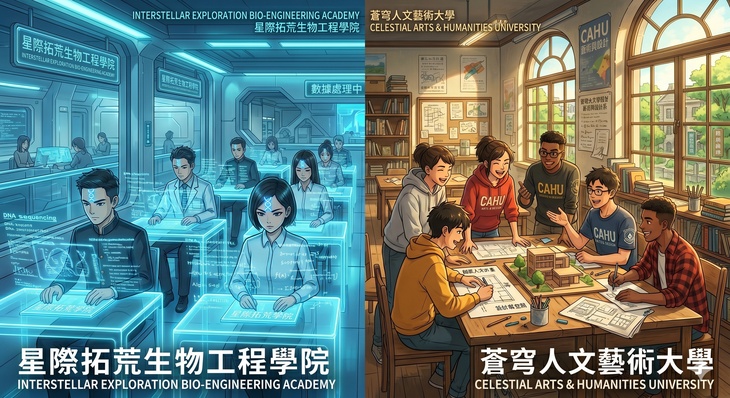
The Future of Genetic Engineering and Education Systems
中文翻譯
基因工程的無情進展,特別是 CRISPR-Cas9 技術的出現,已將人類引入一個充滿史無前例可能性的時代。雖然圍繞這項革命性工具的論述主要集中在根除遺傳性疾病和提高農業產量上,但它對教育系統未來的潛在影響既深遠又極具爭議性。隨著我們更深入地探究認知能力的基因基礎,社會必須努力應對未來教室中可能出現的倫理和結構性挑戰。目前,教育典範是建立在先天神經多樣性的假設之上。學校的設計是為了容納各種學習步調、性向和認知風格。然而,從基因上增強記憶力、專注力和分析推理等特徵的理論能力,可能會從根本上顛覆這個平等的基礎。如果認知增強成為現實,我們將面臨創造出兩極化教育版圖的風險。負擔得起此類干預措施的富裕家庭,可能會不經意地培育出一代「超級學生」,讓那些無法獲得這項技術的人在結構性劣勢的階層中受苦。
這種潛在的基因階層化將加劇現有的社經不平等,將生物學上的優勢轉化為無法克服的學術和職業障礙。教育系統將被迫適應,可能會創造出完全獨立的課程或評估指標,以區分經過基因增強和未經增強的個體。如果認知能力在很大程度上由基因編輯預先決定,那麼菁英領導的概念——即相信努力工作和堅持不懈會帶來成功——將受到深刻的破壞。
此外,過度強調人造智慧可能會不經意地削弱神經多樣性的價值。像是創造力、情緒智商和水平思考等屬性,這些極其複雜且可能是多基因遺傳的特質,可能會為了有利於標準化測驗分數等易於量化的指標而被邊緣化。人類創新的豐富性往往源於多樣化的認知方法,而使智力輪廓同質化最終可能會扼殺社會進步。
總結來說,雖然基因工程有望減輕認知障礙,但其不受限制的應用對我們教育系統的完整性和公平性構成了巨大的威脅。當我們航向這個未知領域時,必須建立嚴格的倫理框架和包容性的政策。我們必須捍衛一項基本原則:教育應該是一個偉大的均衡器,而不是一個放大生物學差異的機制,這是至關重要的。
🔑 重點單字 (Vocabulary)
- unprecedented adj.. 史無前例的;空前的
- contentious adj.. 引起爭議的;好爭吵的
- paradigm n.. 典範;範例
- inherent adj.. 內在的;與生俱來的
- egalitarian adj.. 平等主義的
- bifurcated adj.. 分岔的;兩極化的
- stratification n.. 階層化;成層
- exacerbate v.. 使惡化;加劇
- meritocracy n.. 菁英領導;英才教育
- homogenize v.. 使均質化;使同化
掌握一種語言等於擁有一個新世界
 語言健身房 https://www.langym.com 提供
語言健身房 https://www.langym.com 提供
