
In the contemporary digital era, the music industry is experiencing a profound paradox. On one hand, global audiences have unprecedented access to millions of tracks via streaming platforms. On the other hand, this algorithmic curation often leads to the homogenization of music, where predictable, formulaic tracks dominate the mainstream. To counter this stagnation and ensure the continuous evolution of musical expression, revitalizing grassroots community building has become an indispensable catalyst.
Historically, music has always evolved within the context of tight-knit communities. From the jazz clubs of New Orleans to the underground punk scenes in London, local venues served as vital incubators for artistic innovation. In these spaces, musicians were free from the immediate pressures of commercial success. They could experiment with unconventional sounds, share techniques, and engage in creative dialogues with their peers and audiences. This organic environment fostered a cross-pollination of genres, allowing new, authentic musical movements to emerge naturally.
However, the modern reliance on digital metrics has fractured these physical communities. When artists prioritize viral trends over artistic integrity, the resulting music often lacks cultural depth. To revitalize music evolution, we must deliberately invest in physical and localized digital communities. Independent music venues, community workshops, and local festivals are crucial. They provide a sanctuary for emerging artists to take risks and receive immediate, genuine feedback from dedicated listeners.
Furthermore, community building democratizes music production. By establishing cooperative spaces where resources such as recording equipment and mentorship are shared, marginalized voices are empowered to contribute to the cultural narrative. When diverse backgrounds intersect within a supportive network, the resulting fusion of styles pushes the boundaries of conventional music.
In conclusion, while technology has undeniably expanded the reach of music, it cannot replace the nurturing soil of a vibrant community. The true evolution of art requires a collaborative ecosystem where creativity is valued over algorithms. By consciously rebuilding and supporting local music networks, we can guarantee that music remains a dynamic, ever-evolving reflection of human culture and shared experiences.
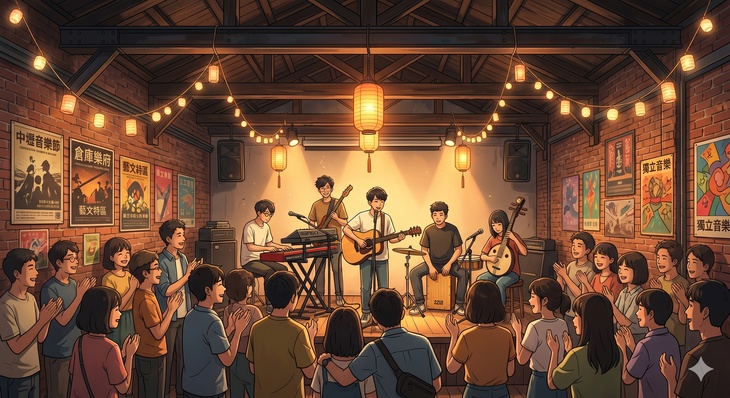
Revitalizing Music Evolution through Community Building
中文翻譯
在當代的數位時代,音樂產業正經歷著一個深刻的矛盾。一方面,全球聽眾可以透過串流平台史無前例地接觸到數百萬首歌曲。另一方面,這種演算法策展往往導致音樂的同質化,可預測的、公式化的曲目主導了主流市場。為了對抗這種停滯並確保音樂表達的持續演進,重振草根社群建設已成為不可或缺的催化劑。從歷史上看,音樂總是在緊密連結的社群背景下發展。從紐奧良的爵士俱樂部到倫敦的地下龐克圈,當地場館扮演著藝術創新重要孵化器的角色。在這些空間裡,音樂家免受商業成功的立即壓力。他們可以嘗試非傳統的聲音、分享技巧,並與同儕和觀眾進行創意對話。這種有機的環境促進了流派的相互交流(異花授粉),讓全新、真實的音樂運動自然地湧現。
然而,現代對數位指標的依賴已經使得這些實體社群破裂。當藝術家將病毒式傳播的趨勢置於藝術完整性之上時,所產生的音樂往往缺乏文化深度。為了重振音樂的發展,我們必須刻意投資於實體和在地化的數位社群。獨立音樂展演空間、社群工作坊和當地音樂節至關重要。它們為新興藝術家提供了一個避難所,讓他們可以冒險並從忠實聽眾那裡獲得立即、真實的回饋。
此外,社群建設使音樂製作民主化。透過建立共享資源(如錄音設備和指導)的合作空間,邊緣化的聲音被賦予力量去參與文化敘事。當不同的背景在一個支持性的網絡中交會時,隨之而來的風格融合將推動傳統音樂的界限。
總結來說,雖然科技無疑擴大了音樂的觸及範圍,但它無法取代充滿活力的社群這片孕育藝術的土壤。藝術的真正演進需要一個協作的生態系統,在其中創造力比演算法更受重視。透過有意識地重建和支持當地音樂網絡,我們可以確保音樂始終是人類文化和共同經驗充滿活力、不斷演進的真實反映。
🔑 重點單字 (Vocabulary)
- revitalize v.. 重振;使恢復生機
- paradox n.. 矛盾(的情況或事物)
- homogenization n.. 同質化
- catalyst n.. 催化劑;促使變化的人/事物
- incubator n.. 孵化器;培育所
- unconventional adj.. 非傳統的;非常規的
- cross-pollination n.. 相互交流;異花授粉
- sanctuary n.. 避難所;庇護所
- marginalize v.. 使邊緣化;忽視
- ecosystem n.. 生態系統
掌握一種語言等於擁有一個新世界
 語言健身房 https://www.langym.com 提供
語言健身房 https://www.langym.com 提供
