
The intersection of advanced biotechnology and artificial intelligence is fundamentally redefining the paradigms of human longevity and psychological resilience. Historically, the quest for a longer life focused predominantly on treating acute illnesses. Today, the focus has shifted towards a proactive model, utilizing cutting-edge technology to enhance both physical healthspan and emotional fortitude.
In the realm of physical longevity, wearable biosensors and continuous health monitoring systems have become indispensable. These ubiquitous devices do more than count steps; they track intricate biomarkers such as heart rate variability, blood oxygen saturation, and sleep architecture. By feeding these massive datasets into sophisticated AI algorithms, anomalies can be detected long before they manifest as clinical symptoms. This continuous feedback loop empowers individuals to make micro-adjustments to their lifestyles, thereby mitigating the risk of chronic diseases and significantly delaying age-related physiological deterioration.
Concurrently, technology is playing a pivotal role in cultivating psychological resilience. Mental health, long recognized as a critical component of overall longevity, is being revolutionized by digital therapeutics. Virtual reality (VR) environments are increasingly utilized for exposure therapy, helping individuals process trauma and build emotional robustness in a controlled, safe setting. Moreover, AI-driven applications provide cognitive behavioral interventions, teaching users how to reframe negative thought patterns and manage chronic stress a known accelerator of biological aging.
However, the integration of these technologies is not without profound caveats. The proliferation of hyper-personalized health data raises formidable ethical concerns regarding privacy and the potential for surveillance. Furthermore, there is a looming risk of exacerbating the digital divide. If access to life-extending and resilience-building technologies is sequestered by the affluent, society risks creating an unbridgeable chasm in health equity.
In conclusion, technology offers unprecedented tools to augment human resilience and longevity, transforming the inevitability of aging into a manageable, optimized process. Yet, to truly harness these advancements, society must construct rigorous ethical frameworks and ensure equitable access. Ultimately, technological innovation must be harmonized with human empathy to ensure that a longer life is also a meaningful and universally attainable one.
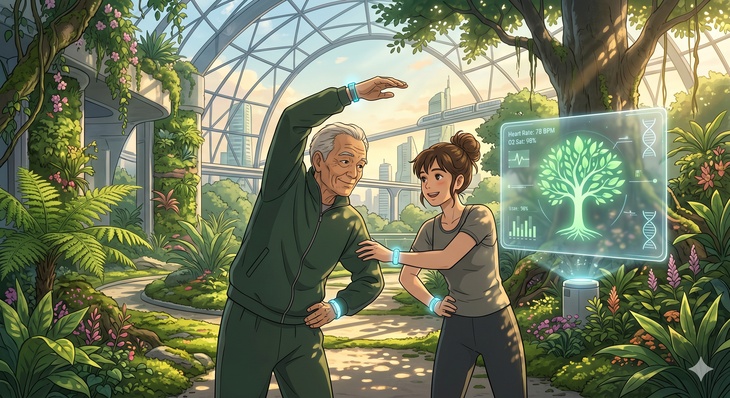
Resilience and Longevity through Technology
中文翻譯
先進生物技術與人工智慧的交集,正從根本上重新定義人類長壽與心理韌性的典範。從歷史上看,追求更長壽命主要集中於治療急性疾病。如今,焦點已轉向積極主動的模式,利用尖端科技來提升生理的健康壽命與情感的堅韌度。在生理長壽的領域中,穿戴式生物感測器和連續健康監測系統已變得不可或缺。這些無所不在的裝置不僅僅是計算步數;它們還追蹤複雜的生物標記,如心率變異性、血氧飽和度以及睡眠結構。透過將這些龐大的數據集輸入精密的人工智慧演算法中,可以在異常情況表現為臨床症狀之前及早被偵測出來。這種連續的反饋迴路賦予了個人對其生活方式進行微調的能力,從而減輕罹患慢性病的風險,並顯著延緩與年齡相關的生理退化。
同時,科技在培養心理韌性方面也扮演著關鍵角色。長期以來被認為是整體長壽關鍵組成部分的心理健康,正被數位療法徹底改變。虛擬實境(VR)環境越來越多地被用於暴露療法,幫助個人在受控且安全的環境中處理創傷並建立情感的強韌度。此外,AI 驅動的應用程式提供認知行為介入,教導使用者如何重構負面思考模式並管理慢性壓力,而慢性壓力正是已知會加速生物衰老的因素。
然而,這些科技的整合並非沒有深遠的警告與限制。高度個人化健康數據的激增,引發了關於隱私和潛在監控的巨大倫理擔憂。此外,還有加劇數位落差的潛在風險。如果延長壽命和建立韌性的科技被富裕階層所壟斷,社會將面臨在健康公平性上造成無法跨越的鴻溝的風險。
總結來說,科技提供了史無前例的工具來增強人類的韌性與長壽,將衰老的必然性轉變為一個可管理、最佳化的過程。然而,為了真正利用這些進步,社會必須建構嚴格的倫理框架並確保公平的取得途徑。最終,科技創新必須與人類同理心相協調,以確保更長的壽命同時也是有意義且所有人都能平等實現的。
🔑 重點單字 (Vocabulary)
- paradigm n.. 典範;範例
- fortitude n.. 堅韌;剛毅
- ubiquitous adj.. 無所不在的
- biomarker n.. 生物標記
- anomaly n.. 異常(事物)
- deteriorate v.. 惡化;退化
- caveat n.. 警告;限制條款
- exacerbate v.. 使惡化;加劇
- sequester v.. 隔離;壟斷/佔用
- equitable adj.. 公平的;公正的
掌握一種語言等於擁有一個新世界
 語言健身房 https://www.langym.com 提供
語言健身房 https://www.langym.com 提供
