
The landscape of scientific innovation is evolving at an unprecedented pace. Consequently, the paradigm of vocational training is undergoing a profound transformation. Historically, vocational education was inextricably linked to traditional manual trades. Today, however, it is increasingly viewed as an indispensable conduit for developing a highly specialized technical workforce capable of navigating complex scientific domains.
The contemporary laboratory or research facility relies heavily on advanced technologies, such as artificial intelligence, robotics, and biotechnology. To operate, maintain, and optimize these sophisticated systems, a new breed of technicians is required. Modern vocational programs are adapting by integrating STEM (Science, Technology, Engineering, and Mathematics) curricula with hands-on, experiential learning. This pragmatic approach equips students with practical skills, bridging the glaring gap between theoretical research and real-world application.
Furthermore, fostering adaptability is paramount. As rapid scientific breakthroughs render older methodologies obsolete, technicians must engage in continuous, lifelong learning. Forward-thinking vocational institutions are forging robust partnerships with industry leaders to ensure their training modules remain relevant. These collaborations often result in apprenticeship programs that immerse students directly into the epicenter of technological advancement, allowing them to cultivate both technical proficiency and critical problem-solving acumen.
Despite these promising developments, a persistent stigma surrounding vocational education remains a formidable hurdle. Many societies still disproportionately revere traditional four-year university degrees, inadvertently marginalizing vocational pathways. To fully harness the potential of scientific innovation, policymakers and educators must recalibrate this societal perception. Elevating the status of vocational training requires adequate funding, state-of-the-art facilities, and comprehensive career counseling that highlights the lucrative and intellectually stimulating nature of modern technical roles.
In conclusion, the future of scientific innovation is intrinsically tied to the evolution of vocational training. By dismantling outdated stigmas and embracing a dynamic, tech-centric curriculum, we can cultivate a resilient workforce equipped to propel humanity into the next frontier of scientific discovery.
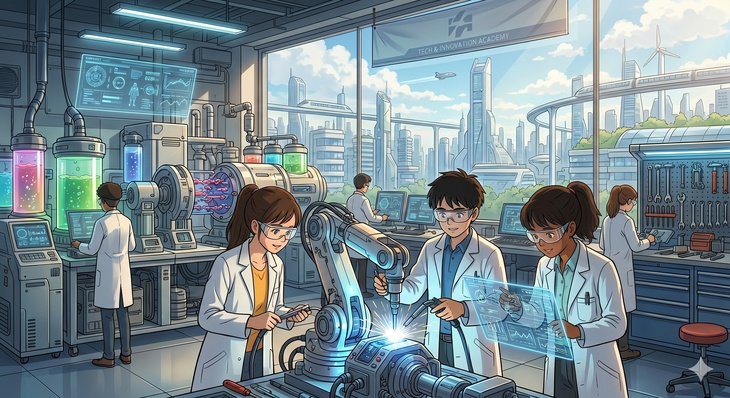
The Future of Vocational Training for Scientific Innovation
中文翻譯
科學創新的版圖正以史無前例的速度演變。因此,職業訓練的典範也正在經歷一場深刻的轉變。從歷史上看,職業教育與傳統的手工行業密不可分。然而在今天,它越來越被視為培養高度專業化技術勞動力、使其能夠駕馭複雜科學領域的不可或缺的管道。當代的實驗室或研究機構嚴重依賴人工智慧、機器人技術和生物技術等先進科技。為了操作、維護並優化這些複雜的系統,需要一種新型態的技術人員。現代職業訓練計畫正透過將 STEM(科學、科技、工程和數學)課程與實作的體驗式學習相結合來適應這種變化。這種務實的方法為學生配備了實用技能,彌合了理論研究與現實世界應用之間明顯的落差。
此外,培養適應力是至關重要的。由於快速的科學突破使舊有方法變得過時,技術人員必須參與持續的終身學習。具前瞻性的職業機構正在與業界領袖建立穩固的合作夥伴關係,以確保他們的培訓模組保持相關性。這些合作通常會促成學徒計畫,讓學生直接沉浸在科技發展的中心,使他們能夠培養技術熟練度與解決關鍵問題的敏銳度。
儘管有這些充滿希望的發展,但圍繞在職業教育周圍揮之不去的污名仍然是一個艱鉅的障礙。許多社會仍然不成比例地尊崇傳統的四年制大學學位,不經意地邊緣化了職業教育的途徑。為了充分發揮科學創新的潛力,決策者和教育工作者必須重新調整這種社會認知。提升職業訓練的地位需要充足的資金、最先進的設施,以及全面的職涯諮詢,以突顯現代技術職位既有利可圖又能在智力上帶來啟發的本質。
總結來說,科學創新的未來與職業訓練的演進有著本質上的聯繫。透過消除過時的污名並擁抱充滿活力、以科技為中心的課程,我們可以培養出一支具備韌性的勞動力,準備好推動人類邁向科學發現的下一個前沿。
🔑 重點單字 (Vocabulary)
- unprecedented adj.. 史無前例的;空前的
- paradigm n.. 典範;模式
- indispensable adj.. 不可或缺的
- sophisticated adj.. 複雜的;精密的
- pragmatic adj.. 務實的;實用的
- obsolete adj.. 過時的;被淘汰的
- acumen n.. 敏銳度;聰明
- stigma n.. 污名;恥辱
- marginalize v.. 使邊緣化;忽視
- lucrative adj.. 有利可圖的;賺錢的
掌握一種語言等於擁有一個新世界
 語言健身房 https://www.langym.com 提供
語言健身房 https://www.langym.com 提供
