
In recent years, the spread of fake news has become a serious problem around the world. Fake news refers to stories that are not true but are written to look like real news. In the past, people mostly got their information from newspapers, television, and radio. However, today, the internet and social media have completely changed how we receive news.
One major reason why fake news spreads so quickly is that anyone can publish information online. Many websites create shocking or emotional headlines just to get more "clicks." When people see these exciting headlines, they often share the stories with their friends without checking the facts first. This means that a lie can reach millions of people in just a few hours.
The effects of fake news can be very dangerous. It can make people believe wrong things about health, politics, or the environment. For example, during a health crisis, fake news might tell people to use dangerous medicines or avoid seeing a doctor. This kind of misinformation can hurt public safety. Furthermore, fake news often causes anger and division in society, making it hard for people to trust each other.
To solve this problem, everyone needs to be careful. Tech companies like Facebook and Twitter are trying to use computer programs to find and remove false information. However, this is not enough. As readers, we must develop good critical thinking skills. We should always check the source of a story and read articles from trusted news organizations.
In conclusion, fake news is a modern challenge that we must face together. By taking the time to verify information and think deeply before we share, we can protect ourselves and our society from the harmful impact of lies.
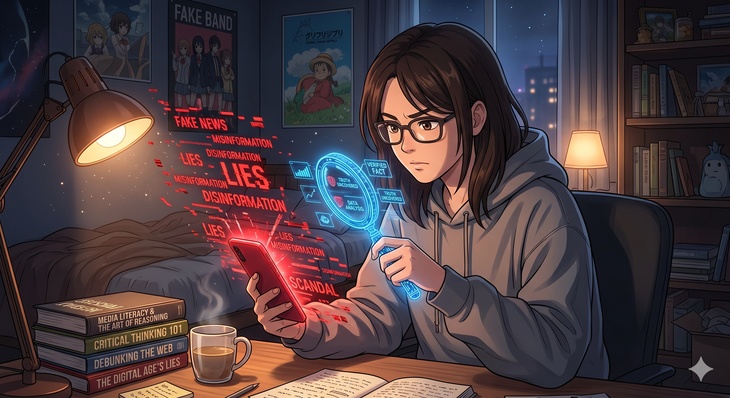
The Challenges of Fake News Today
中文翻譯
近年來,假新聞的散布已成為世界各地一個嚴重的問題。假新聞指的是不真實的故事,但被寫得看起來像真的新聞。在過去,人們主要從報紙、電視和廣播獲取資訊。然而,今天,網際網路和社群媒體已經完全改變了我們接收新聞的方式。假新聞散布如此之快的一個主要原因是,任何人都可以在網路上發布資訊。許多網站創造出令人震驚或充滿情緒的標題,只為了獲得更多「點擊」。當人們看到這些令人興奮的標題時,他們經常在沒有先查證事實的情況下,就把故事分享給他們的朋友。這意味著一個謊言可以在短短幾個小時內傳達給數百萬人。
假新聞的影響可能是非常危險的。它可以讓人們對健康、政治或環境產生錯誤的信念。例如,在健康危機期間,假新聞可能會告訴人們使用危險的藥物或避免去看醫生。這種錯誤資訊會損害公共安全。此外,假新聞經常在社會中引起憤怒和分裂,讓人們難以互相信任。
為了解決這個問題,每個人都需要小心。像臉書和推特這樣的科技公司正試圖使用電腦程式來尋找並移除錯誤資訊。然而,這是不夠的。作為讀者,我們必須發展良好的批判性思考技能。我們應該總是檢查故事的來源,並閱讀來自可信賴新聞機構的文章。
總結來說,假新聞是我們必須共同面對的現代挑戰。透過花時間核實資訊並在分享前深入思考,我們可以保護自己和社會免受謊言的有害影響。
🔑 重點單字 (Vocabulary)
- spread n. / v.. 散布;蔓延
- refer v.. 指的是;提及
- publish v.. 發布;出版
- emotional adj.. 情緒化的;引起情感的
- crisis n.. 危機
- misinformation n.. 錯誤資訊
- division n.. 分裂;分歧
- critical adj.. 批判性的;關鍵的
- verify v.. 查證;核實
- impact n.. 影響;衝擊
掌握一種語言等於擁有一個新世界
 語言健身房 https://www.langym.com 提供
語言健身房 https://www.langym.com 提供
