
The concept of a "smart city" has transitioned from a futuristic vision into a tangible reality, fundamentally reshaping how urban populations interact with their environments. At its core, a smart city utilizes the Internet of Things (IoT), artificial intelligence, and big data analytics to optimize municipal operations and enhance the quality of life for its residents. This integration of technology into daily routines is not merely about convenience; it represents a profound evolution in urban management and sustainability.
One of the most visible impacts of smart city integration is the transformation of public transportation. Commuters no longer rely on static timetables. Instead, ubiquitous sensors and GPS technology provide real-time updates on bus and train locations, alleviating the frustration of unpredictable delays. Furthermore, intelligent traffic management systems analyze traffic flow dynamically, adjusting stoplight timings to mitigate congestion and reduce carbon emissions. This seamless coordination exemplifies how technology can dismantle daily urban hurdles.
Beyond transportation, the integration extends into the very infrastructure of our homes and utilities. Smart grids manage electricity distribution with unprecedented efficiency, automatically diverting power to areas with high demand while storing surplus energy during off-peak hours. In a residential context, smart meters empower individuals to monitor and curtail their energy consumption in real-time. Similarly, automated waste management systems utilize sensors inside garbage bins to alert sanitation departments only when they are full, optimizing collection routes and saving substantial municipal resources.
However, the widespread implementation of smart city technologies is not devoid of formidable challenges. The cornerstone of these interconnected systems is data—massive quantities of personal and behavioral information continuously harvested from citizens. Consequently, cybersecurity and data privacy have become paramount concerns. If a centralized municipal database were compromised by malicious hackers, the potential disruption to critical infrastructure would be catastrophic.
In conclusion, the integration of smart cities into daily life offers remarkable prospects for efficiency, environmental sustainability, and overall convenience. Yet, to fully harness these technological advancements, policymakers must construct robust regulatory frameworks that meticulously balance innovation with the imperative to protect individual privacy. Only through this delicate equilibrium can smart cities truly fulfill their promise of a better urban future.
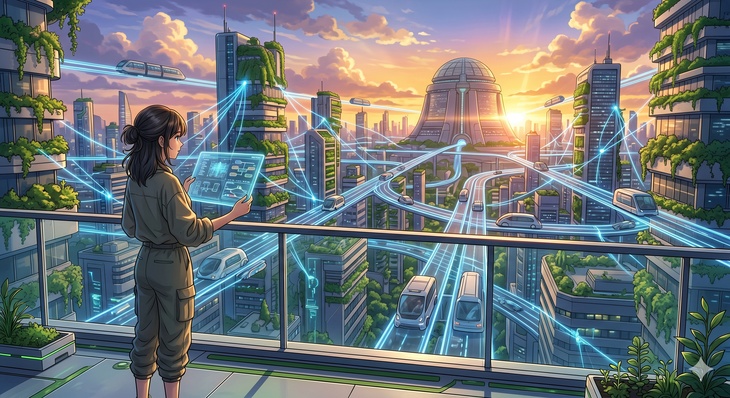
The Integration of Smart Cities into Daily Life
中文翻譯
「智慧城市」的概念已從未來的願景轉變為切實的現實,從根本上重塑了城市人口與其環境互動的方式。在其核心,智慧城市利用物聯網 (IoT)、人工智慧和大數據分析來優化市政運作並提升居民的生活品質。這種將科技融入日常事務的做法不僅僅是為了方便;它代表了城市管理與永續性上一次深刻的演進。智慧城市整合最顯著的影響之一是公共交通的轉型。通勤者不再依賴靜態的時刻表。取而代之的是,無所不在的感測器和 GPS 科技提供了公車和火車位置的即時更新,減輕了無法預測之延誤所帶來的挫折感。此外,智慧交通管理系統能動態地分析車流,調整紅綠燈的時間以緩解壅塞並減少碳排放。這種無縫的協調證明了科技如何消除日常的城市障礙。
除了交通,這種整合還延伸到了我們家庭和公用事業的基礎設施中。智慧電網以史無前例的效率管理電力分配,自動將電力轉移到需求高的地區,同時在離峰時段儲存剩餘能源。在住宅的環境中,智慧電表賦予個人即時監控並減少能源消耗的能力。同樣地,自動化廢棄物管理系統利用垃圾桶內的感測器,只有在垃圾桶滿了的時候才向環境衛生部門發出警報,從而優化收集路線並節省大量的市政資源。
然而,智慧城市科技的廣泛實施並非沒有艱鉅的挑戰。這些互聯系統的基石是數據——持續從公民身上收集的大量個人與行為資訊。因此,網路安全與資料隱私已成為首要的擔憂。如果一個集中的市政資料庫被惡意駭客入侵,對關鍵基礎設施造成的潛在破壞將會是災難性的。
總結來說,將智慧城市融入日常生活為效率、環境永續性與整體便利性提供了非凡的前景。然而,為了充分利用這些科技進步,決策者必須建構穩健的監管框架,小心翼翼地在創新與保護個人隱私的必要性之間取得平衡。唯有透過這種微妙的平衡,智慧城市才能真正實現其創造更美好城市未來的承諾。
🔑 重點單字 (Vocabulary)
- tangible adj.. 具體的;切實的
- municipal adj.. 市政的;地方政府的
- ubiquitous adj.. 無所不在的
- mitigate v.. 減輕;緩和
- congestion n.. 壅塞;擠滿
- surplus n. / adj.. 剩餘;過剩的
- curtail v.. 縮減;限制
- formidable adj.. 艱鉅的;令人敬畏的
- paramount adj.. 首要的;最重要
- imperative n. / adj.. 迫切的需要;極重要的
掌握一種語言等於擁有一個新世界
 語言健身房 https://www.langym.com 提供
語言健身房 https://www.langym.com 提供
