
In an era characterized by rapid technological advancement and complex global challenges, the traditional dichotomy between academic research and practical application is becoming increasingly obsolete. Historically, scientific innovation was often viewed as the exclusive domain of university laboratories and elite research institutions. However, there is a growing recognition that vocational training plays an indispensable, yet often undervalued, role in driving scientific and technological progress.
Vocational education is fundamentally designed to equip individuals with specific, practical skills tailored to the demands of various industries. As the scientific frontier expands into fields such as renewable energy, advanced manufacturing, and biotechnology, the need for a highly skilled technical workforce has never been more acute. While theoretical scientists might conceptualize a revolutionary new solar panel or a complex medical device, it is the meticulously trained technicians who possess the hands-on expertise required to build, operate, and maintain these sophisticated systems. Without this vital bridge between abstract theory and tangible creation, many groundbreaking ideas would languish as mere prototypes.
Furthermore, the nature of innovation itself is evolving. It is no longer solely a top-down process originating from isolated visionaries. Instead, it frequently emerges from the factory floor or the laboratory bench, where technicians encounter practical hurdles. These frontline workers, trained through rigorous vocational programs, are uniquely positioned to identify operational inefficiencies and propose pragmatic solutions. Their deep, experiential understanding of machinery and materials often leads to incremental, yet profound, improvements in manufacturing processes, which are the bedrock of sustainable industrial innovation.
To fully harness the potential of this synergy, governments and educational institutions must endeavor to elevate the status of vocational training. This involves dismantling the persistent social stigma that unfairly elevates traditional four-year degrees over technical certifications. By fostering robust partnerships between vocational schools, universities, and private enterprises, societies can create cohesive innovation ecosystems.
Ultimately, recognizing the pivotal role of vocational training is not merely an economic imperative; it is a strategic necessity. By investing in the individuals who physically construct the future, we ensure that the lofty ambitions of scientific research are successfully translated into practical realities that benefit society as a whole.
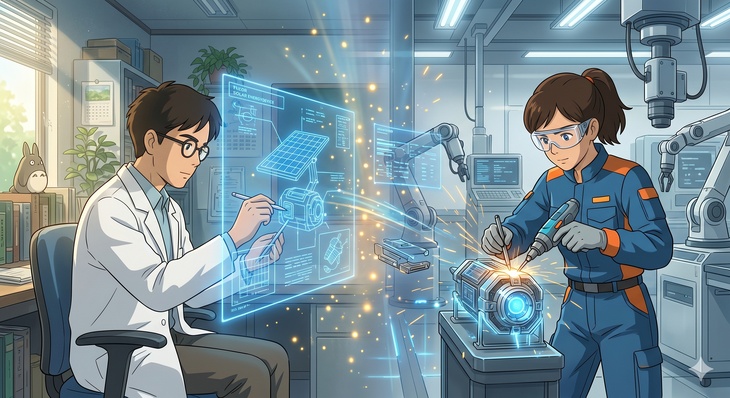
The Role of Vocational Training in Scientific Innovation
中文翻譯
在一個以科技快速進步和複雜全球挑戰為特徵的時代,學術研究與實際應用之間傳統的二分法正變得越來越過時。從歷史上看,科學創新經常被視為大學實驗室和菁英研究機構的專屬領域。然而,人們越來越認識到,職業訓練在推動科學與技術進步方面,扮演著不可或缺卻經常被低估的角色。職業教育的根本設計是為了讓個人具備針對各行各業需求量身打造的特定實用技能。隨著科學前沿擴展至再生能源、先進製造和生物技術等領域,對高技能技術勞動力的需求從未如此迫切。雖然理論科學家可能會構思出革命性的新型太陽能板或複雜的醫療設備,但正是那些受過一絲不苟訓練的技術人員,擁有建造、操作和維護這些精密系統所需的實作專業知識。如果沒有這座連接抽象理論與具體創造的重要橋樑,許多突破性的想法將會淪為單純的原型而停滯不前。
此外,創新本身的性質也在演變。它不再僅僅是源自孤立的有遠見者由上而下的過程。相反地,它經常出現在工廠廠房或實驗室工作台中,技術人員在那裡會遇到實際的障礙。這些透過嚴格職業計畫訓練出來的第一線工作人員,處於獨特的有利位置,能夠發現營運上的低效並提出務實的解決方案。他們對機械和材料深厚的體驗式理解,往往會導致製造過程中漸進但深遠的改善,而這正是永續工業創新的基石。
為了充分利用這種協同作用的潛力,政府和教育機構必須努力提升職業訓練的地位。這包含了消除不公平地將傳統四年制學位凌駕於技術認證之上的頑固社會污名。透過在職業學校、大學和私人企業之間建立穩固的合作夥伴關係,社會可以創造出具凝聚力的創新與生態系統。
最終,體認到職業訓練的關鍵作用不僅僅是經濟上的當務之急;這是一項戰略必需品。透過投資那些實際建造未來的人,我們能確保科學研究的崇高抱負被成功地轉化為造福整個社會的實際現實。
🔑 重點單字 (Vocabulary)
- dichotomy n.. 二分法;對立
- obsolete adj.. 過時的;被淘汰的
- indispensable adj.. 不可或缺的
- conceptualize v.. 構想;使概念化
- languish v.. 受苦;停滯不前;被冷落
- prototype n.. 原型;典型
- pragmatic adj.. 務實的;實用主義的
- synergy n.. 協同作用;綜效
- stigma n.. 污名;恥辱
- imperative n. / adj.. 極重要的事;勢在必行的
掌握一種語言等於擁有一個新世界
 語言健身房 https://www.langym.com 提供
語言健身房 https://www.langym.com 提供
