
Cultural heritage represents the indelible footprint of human civilization, transcending mere physical artifacts to encompass the intangible ethos of bygone eras. It is a profound repository of collective memory, intrinsically linking contemporary societies to their ancestral roots. While the manifestations of this heritage ranging from monumental architecture and classical literature to oral traditions and performing arts vary drastically across different civilizations, its underlying role remains universally paramount: to furnish a sense of continuity and identity in a perpetually evolving world.
In Western civilizations, the preservation of cultural heritage is frequently institutionalized, manifesting in the meticulous curation of museums, archives, and designated historical landmarks. These bastions of history serve not only as educational resources but also as pivotal drivers of cultural tourism. The reverence for Greco-Roman antiquity, for instance, has continuously shaped Western philosophical and artistic paradigms, providing a foundational narrative upon which successive generations have built. This formalized preservation ensures that the achievements and tribulations of the past remain palpably accessible to the public.
Conversely, in many Indigenous and Eastern cultures, heritage is often profoundly interwoven with daily existence and spiritual practices. The transmission of knowledge is inherently organic, passed down through generations via storytelling, rituals, and traditional craftsmanship. Here, cultural heritage is not a static relic to be observed behind glass, but a living, breathing entity that dictates social cohesion and moral frameworks. The Japanese concept of *shokunin* (master craftsmanship), or the oral histories of Native American tribes, exemplifies how intangible heritage sustains community resilience and fosters a deep, reciprocal relationship with the natural environment.
Despite these divergent approaches, the globalization of the 21st century poses a ubiquitous threat to cultural heritage worldwide. Rapid urbanization, geopolitical conflicts, and the homogenizing effects of digital mass media risk eroding these unique cultural tapestries. Consequently, international organizations are increasingly advocating for a holistic approach to heritage conservation one that safeguards both tangible monuments and intangible traditions.
Ultimately, cultural heritage is not merely a nostalgic yearning for the past. It is an indispensable compass that guides humanity’s trajectory. By cherishing the diverse legacies of various civilizations, we cultivate mutual empathy and construct a more pluralistic, culturally enriched future.
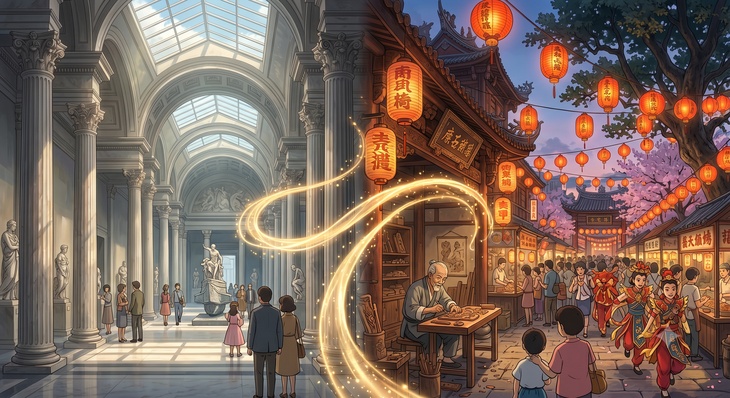
The Role of Cultural Heritage Across Civilizations
中文翻譯
文化遺產代表著人類文明不可磨滅的足跡,超越了單純的實體文物,涵蓋了過往時代無形的精神特質。它是集體記憶的深邃寶庫,本質上將當代社會與其祖先的根源連結起來。雖然這種遺產的表現形式,從紀念性建築和古典文學到口傳傳統和表演藝術在不同文明之間差異極大,但其潛在的作用卻是舉世無雙的:在一個不斷演變的世界中提供連續性與認同感。在西方文明中,文化遺產的保存經常被制度化,體現在博物館、檔案館和指定歷史地標的一絲不苟的策展中。這些歷史堡壘不僅作為教育資源,也是文化旅遊的關鍵驅動力。例如,對古希臘羅馬時代的崇敬持續塑造了西方的哲學和藝術典範,為後代奠定了敘事基礎。這種正式的保存確保了過去的成就與苦難能具體地讓公眾接觸到。
相反地,在許多原住民和東方文化中,遺產通常與日常生活和精神實踐有著深刻的交織。知識的傳遞本質上是具有生命力的,透過說故事、儀式和傳統工藝代代相傳。在這裡,文化遺產不是在玻璃後面被觀察的靜態遺跡,而是一個活生生的、會呼吸的實體,它主導著社會凝聚力和道德框架。日本的「職人」(大師級工藝)概念,或是美洲原住民部落的口述歷史,都例證了無形遺產如何維持社區的韌性,並培養出與自然環境之間深厚、互惠的關係。
儘管有這些分歧的方法,21 世紀的全球化對世界各地的文化遺產構成了無所不在的威脅。快速的城市化、地緣政治衝突以及數位大眾媒體的同質化效應,都可能侵蝕這些獨特的文化織錦。因此,國際組織越來越提倡一種全面的遺產保育方法,一種既保護有形紀念碑又保護無形傳統的方法。
最終,文化遺產不僅僅是對過去的懷舊渴望。它是引導人類發展軌跡不可或缺的指南針。透過珍惜各種文明的多元遺產,我們培養了相互的同理心,並建構了一個更多元、文化更豐富的未來。
🔑 重點單字 (Vocabulary)
- indelible adj.. 不可磨滅的;無法消除的
- intangible adj.. 無形的;難以捉摸的
- repository n.. 寶庫;儲藏處
- intrinsically adv.. 本質上地;固有地
- paramount adj.. 首要的;至高無上的
- meticulous adj.. 一絲不苟的;非常仔細的
- tribulation n.. 苦難;艱難
- reciprocal adj.. 互惠的;相互的
- ubiquitous adj.. 無所不在的;普遍存在的
- holistic adj.. 全面的;整體的
掌握一種語言等於擁有一個新世界
 語言健身房 https://www.langym.com 提供
語言健身房 https://www.langym.com 提供
